
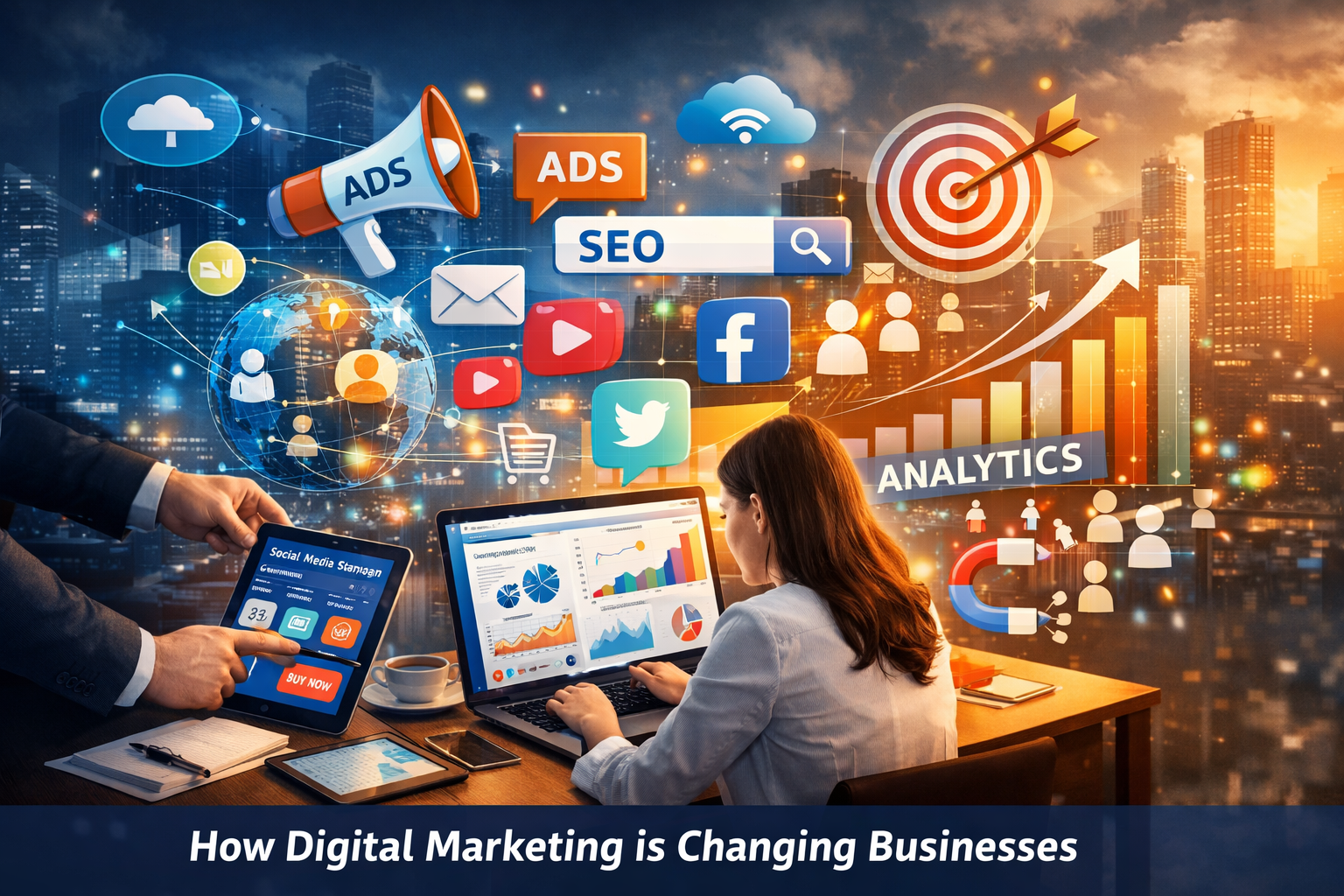
Today’s fast-paced digital world, businesses are changing the way they connect with customers. Traditional marketing methods such as print ads, billboards, and television commercials are no longer the only ways to reach an audience. Digital marketing has become a powerful tool that is reshaping how companies promote their products, communicate with customers, and grow their brands. One of the biggest advantages of digital marketing is the ability to reach a global audience. Through websites, social media platforms, and online advertising, businesses can promote their products to people all over the world. Even small businesses can compete with larger companies by using digital platforms to expand their visibility. Digital marketing is often more affordable than traditional marketing methods. Platforms like social media, email marketing, and content marketing allow businesses to promote their products with smaller budgets. This makes it easier for startups and small businesses to build brand awareness without spending large amounts of money. Another major benefit of digital marketing is the ability to target specific audiences. Businesses can use data and analytics to understand customer behavior, preferences, and demographics. This allows them to create personalized advertisements that reach the right people at the right time, increasing the chances of conversion. Digital marketing tools provide real-time data and insights. Businesses can track website traffic, engagement, conversions, and customer interactions instantly. These analytics help companies understand what works and what doesn’t, allowing them to adjust their strategies quickly and improve results. Digital marketing is no longer optional for businesses—it is essential. It offers cost-effective ways to reach larger audiences, build relationships with customers, and measure marketing success. Companies that embrace digital marketing strategies can grow faster and stay ahead in today’s competitive business environment. Content-Driven Marketing is a digital marketing strategy where businesses create and share valuable, relevant, and consistent content to attract and engage their target audience. Instead of directly promoting products or services, the focus is on providing useful information that helps customers, builds trust, and encourages them to choose the brand over time. Content-driven marketing is a powerful strategy that focuses on helping customers before selling to them. By consistently creating valuable content, businesses can build strong relationships, increase brand awareness, and generate long-term growth.
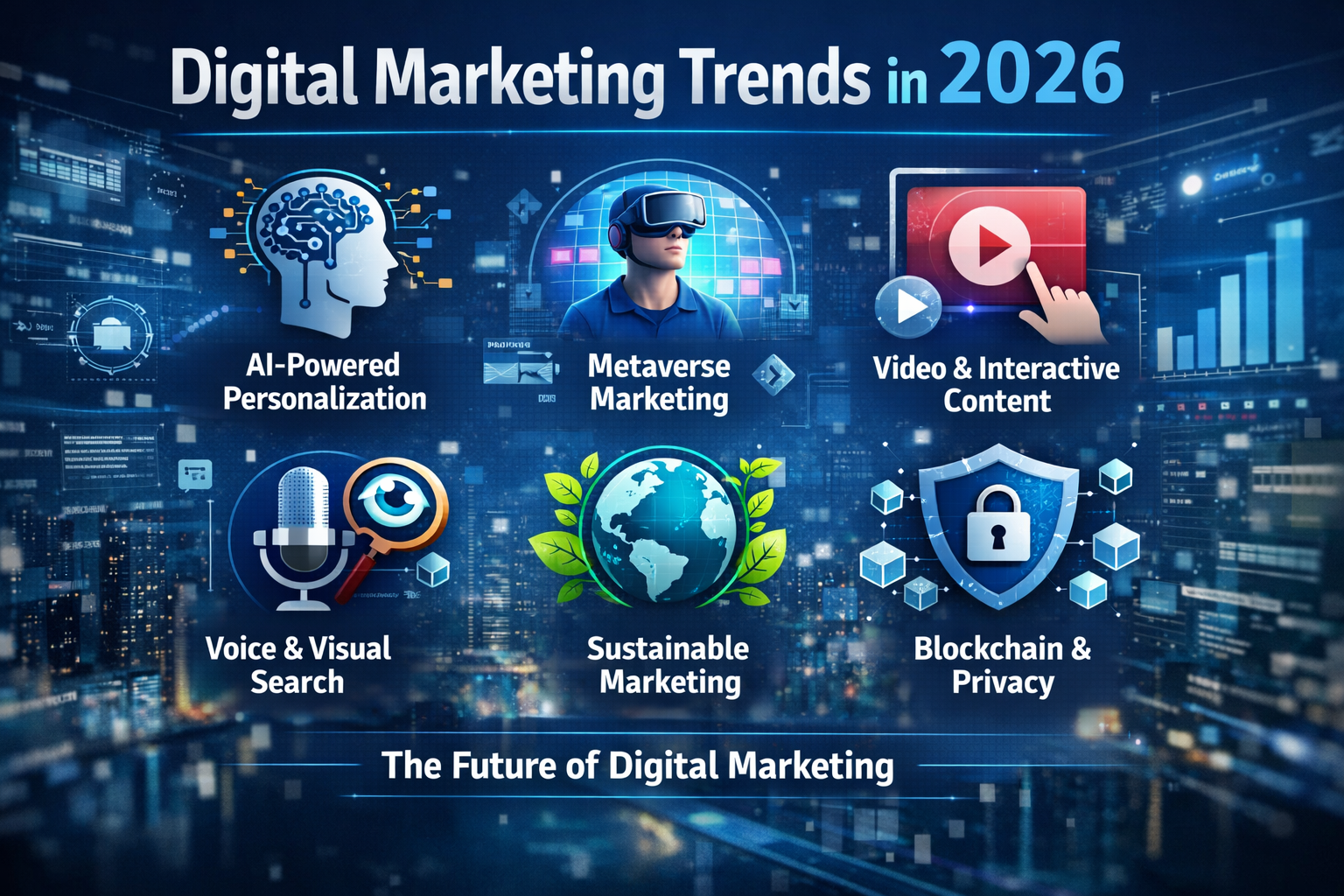
Digital Marketing Trends in 2026
Digital marketing trends refer to the new strategies and technologies that businesses use to promote products and services online. These trends change frequently due to advancements in technology and changes in consumer behavior. 1. Artificial Intelligence (AI) in MarketingAI tools are widely used for content creation, customer analysis, and automated advertising. They help marketers personalize campaigns and improve targeting. 2. Short-Form Video ContentShort videos on platforms like TikTok, Instagram Reels, and YouTube Shorts attract high engagement and help brands quickly reach audiences. 3. Social CommerceSocial media platforms are becoming online shopping platforms where users can discover and buy products directly. 4. Voice and Visual SearchWith the rise of voice assistants and image-based search, businesses are optimizing content for spoken queries and visual recognition. 5. Influencer and Micro-Influencer MarketingBrands collaborate with influencers who have loyal followers to promote products and build trust with audiences. Conclusion:Digital marketing is evolving with technologies like AI, social media platforms, and personalized customer experiences. Businesses must adapt to these trends to stay competitive and effectively reach their target audience.
The Future of Digital Marketing in 2026
Digital marketing is evolving faster than ever. With advancements in technology, changing consumer behavior, and the rise of artificial intelligence, the way businesses market their products and services is transforming dramatically. In 2026, digital marketing will not just be about promoting brands — it will be about personalization, automation, data-driven decisions, and meaningful customer experiences. As a digital marketer, understanding these changes is essential to stay ahead in the industry. One of the biggest trends shaping the future of digital marketing is Artificial Intelligence (AI). In 2026, AI will play a major role in content creation, customer service, advertising, and analytics. Tools like AI chatbots, automated email marketing, and AI-powered content generators will help marketers work smarter and faster. Businesses will be able to analyze customer data more effectively and create highly personalized marketing campaigns. Short-form videos on platforms like Instagram Reels, YouTube Shorts, and TikTok will continue to grow in popularity. In 2026, businesses that invest in creative, engaging video content will have a higher chance of reaching and connecting with their audience. Video marketing will no longer be optional — it will be a necessity for brand growth. With the increasing use of smart assistants like Google Assistant, Alexa, and Siri, voice search optimization will become more important. Digital marketers will need to focus on conversational keywords and natural language content to make websites more voice-search friendly. With the increasing use of smart assistants like Google Assistant, Alexa, and Siri, voice search optimization will become more important. Digital marketers will need to focus on conversational keywords and natural language content to make websites more voice-search friendly. The future of digital marketing in 2026 is exciting, dynamic, and full of opportunities. With AI, video content, personalization, and data-driven strategies leading the way, digital marketers must continuously learn and adapt. As I continue my journey in digital marketing, I am excited to embrace these changes and help brands grow in this ever-evolving digital world. The world of digital marketing moves fast and 2026 is shaping up to be one of the most transformative years yet. Artificial intelligence is redefining search. Privacy regulations are reshaping how brands collect and use data. And in an era of information overload, trust has become the most valuable currency for brands. The rules of digital marketing are being rewritten in real time. As 2026 begins, AI is no longer an experiment—it’s the engine behind personalization, automation, and smarter search. Consumer behavior is evolving faster than ever, and the strategies that worked last year may already be outdated. 1. AI-Generated Content Personalization at Scale Written by commercepundit Published on November 17, 2025 Read time 6 minutes Top Digital Marketing Trends to Watch in 2026 Digital marketing is evolving fast, faster than most brands can keep up. But while the tools change, one thing stays the same: attention is currency. If your business isn’t aligned with how people discover, consume, and engage with content in 2026, you’re already playing catch-up. That’s why we mapped out the most impactful digital marketing trends expected to define this year and beyond. From AI-powered personalization to zero-click search, here’s where the future of digital marketing is heading and what smart brands are already planning for. 15 Digital Marketing Trends to Look For in 2026 AI-generated content personalization at scale Voice search & conversational SEO optimization Predictive analytics for marketing automation Short-form vertical video dominance Hyperlocal targeting with geo-personalization Growth of zero-click and AI search Rise of programmatic native ads Privacy-first marketing with zero-party data Micro-Influencer Marketing 2.0 Interactive Content Experiences Cross-Channel Retargeting Using First-Party Data Decentralized Social Media & Community-Led Brands Sustainability-Driven Brand Messaging Real-Time Personalization via CDPs & Edge Computing AI & Hybrid Creators Let’s understand in-detail about these trends. 1. AI-Generated Content Personalization at Scale AI isn’t just generating content, it’s shaping entire customer journeys. Using tools like ChatGPT, Jasper, or Claude, brands are now creating landing pages, product descriptions, email campaigns, and even ad copy that’s dynamically tailored to the user. And it’s working. A study by Salesforce found that 73% of customers expect brands to understand their unique needs. In 2026, static content will look like a billboard in a digital world. AI-driven dynamic content is the new standard.
